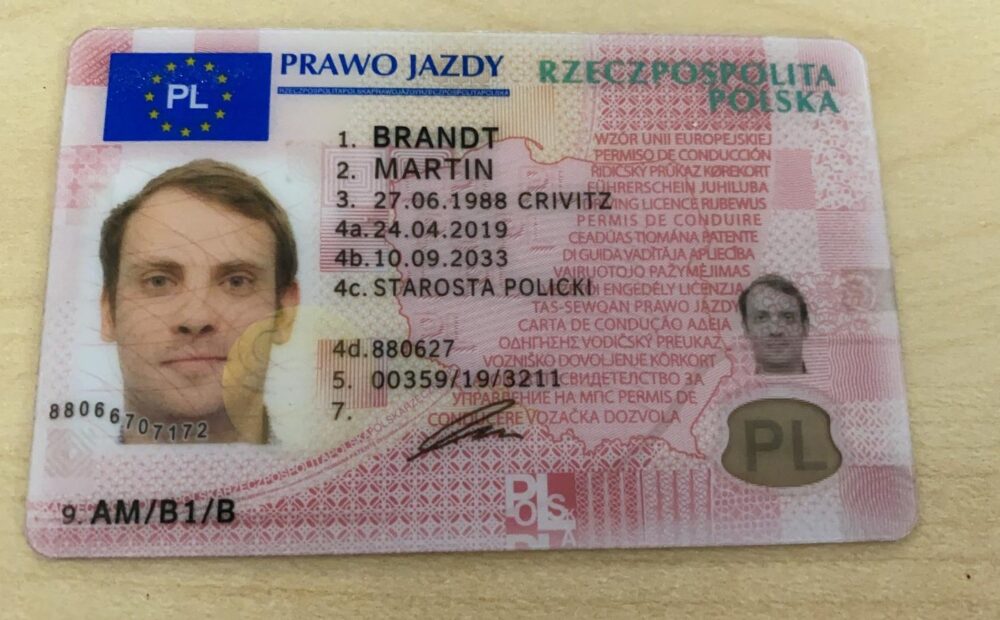
Navigating the Roads of Poland: A Comprehensive Guide to Obtaining a Driving License
Driving in Poland uses both the freedom to check out picturesque landscapes and a hassle-free method to navigate urban areas. Nevertheless, acquiring a driving license can appear daunting for both residents and migrants. This guide comprehensively takes a look at the procedure of getting a driving license in Poland, including the requirements, different types of licenses available, and responses to the most typical concerns.
Types of Driving Licenses in Poland
Poland follows the European Union (EU) regulations worrying driving licenses, classifying them into numerous groups based on automobile types. The primary kinds of driving licenses include the following:
| License Category | Description | Minimum Age | Automobile Type |
|---|---|---|---|
| A | Motorbikes | 24 or 20 (if finished A2) | Two-wheeled vehicles over 125 cc |
| A1 | Light motorcycles | 16 | Two-wheeled lorries as much as 125 cc |
| A2 | Medium motorbikes | 18 | Two-wheeled lorries up to 400 cc |
| B | Cars and trucks and light vans | 18 | Automobiles as much as 3.5 tons and approximately 9 seats |
| C | Heavy items cars | 21 | Automobiles over 3.5 tons |
| D | Buses | 24 | Automobiles developed for more than 9 guests |
| BE | Towing a trailer | 18 | Automobiles with trailers over 750 kg |
| C1 | Medium trucks | 18 | Automobiles in between 3.5 and 7.5 lots |
| D1 | Minibuses | 21 | Cars developed for 9 to 16 guests |
The Process of Obtaining a Driving License in Poland
1. Eligibility Criteria
Before looking for a driving license in Poland, the following criteria should be met:
- Age: Applicants must be at least the minimum age specified for the wanted license category.
- Residency: Foreigners may require to supply evidence of residency or legal status in Poland.
- Health: A medical exam carried out by a designated physician is required to verify that the applicant is fit to drive.
2. Registering in a Driving School
Choosing a trusted driving school is crucial. The school will provide necessary theoretical and practical training. The following elements need to be thought about when picking a driving school:
- Reputation and reviews: Check online ratings and reviews.
- Instructors' certifications: Ensure instructors are certified experts.
- Pass rates: Inquire about the school's passing rates for the driving test.
3. Theoretical Courses and Exam
After registering, students should complete a theoretical course, that includes the list below subjects:
- Traffic laws
- Roadway signs
- Protective driving methods
- Very first help
As soon as the theoretical training is finished, trainees should pass a written exam. The format of the exam normally includes multiple-choice questions and covers all topics taught in class.
4. Practical Training and Examinations
Following the theoretical exam, students continue to practical training, which usually includes:
- Driving practice: Hours behind the wheel, discovering automobile control, and roadway habits.
- Mock tests: Simulated driving tests to prepare trainees for the official examination.
After finishing useful training, prospects take the practical driving test, which examines their capability to run a lorry securely on public roadways.
5. Acquiring the License
Upon passing both exams, prospects can request their driving license. The actions consist of:
- Submitting an application at the local interaction workplace (Urząd Komunikacji).
- Offering necessary files, consisting of the passed exam certificates, medical exam, identity evidence, and proof of residency.
- Paying the associated fees, which differ based upon the license category and location.
It's necessary to wait for the processing time, which may take from a few weeks to a number of months.
Expenses Involved in Obtaining a Driving License
The expenses may vary considerably depending upon the driving school and area but usually consist of the following:
| Item | Estimated Cost (PLN) |
|---|---|
| Course charges (theoretical & & practical) | 1,500 - 3,000 |
| Medical exam | 200 - 300 |
| Driving test fees | 200 - 300 |
| License issuance charge | 100 - 150 |
| Total Estimated Cost | 2,000 - 3,750 |
Frequently Asked Questions About Driving Licenses in Poland
1. Can I drive in Poland with a foreign driving license?
Yes, many foreign driving licenses are legitimate in Poland for approximately six months. After that, it's recommended to exchange the foreign license for a Polish one, especially for those planning to reside longer.
2. Can I take the driving test in English?
Yes, many driving schools in Poland use courses and examinations in English. However, schedule may differ by location, so it's a good idea to verify with individual schools.
3. How long is a Polish driving license legitimate?
A Polish driving license is typically legitimate for 15 years. After this duration, it needs to be renewed, however the renewal procedure is generally uncomplicated and does not need retaking examinations.
4. What if I fail my driving test?
Prospects can retake the driving test, although there might be a waiting period or additional costs included. Prawo Jazdy Kat C Czym Można Jeździć 's suggested to take extra lessons to prepare for the retake.
5. Are there any penalties for driving without a license in Poland?
Yes, driving without a legitimate license in Poland can result in fines, vehicle confiscation, and, sometimes, criminal charges. It is important to guarantee that all driving credentials are valid and as much as date.
Navigating the procedure of acquiring a driving license in Poland is attainable with appropriate preparation and understanding of the requirements. With the ideal guidance and effort, both locals and expatriates can delight in the benefit and freedom of driving across Poland's stunning roads. Whether one is a newbie driver or transforming a foreign license, being educated can make this journey a favorable experience. Safe travels!